

Table of Contents
Key Takeaways
- 1Tinnitus feels louder at night due to reduced background noise and increased brain awareness of internal sounds
- 2Sound therapy with white, pink, or nature sounds can effectively mask tinnitus for better sleep
- 3A consistent 7-night protocol combining sound therapy, relaxation, and sleep hygiene significantly improves sleep quality
- 4Background audio that plays all night prevents tinnitus from becoming noticeable during brief awakenings
- 5Most people can achieve normal sleep patterns through habituation and proper tinnitus management techniques
If you're struggling to sleep with loud ringing in your ears, you're not alone. Learning how to sleep with loud ringing in ears is one of the biggest challenges facing the millions of people who experience tinnitus. The constant noise can make falling asleep feel impossible, and the anxiety about not sleeping often makes the ringing even worse.
The good news? There are proven strategies that can help you get restful sleep despite tinnitus. This comprehensive guide will walk you through the science behind nighttime tinnitus, a practical 7-night sleep protocol, and the most effective sound therapy options available.
Whether you've been dealing with tinnitus for years or it's a recent development, you'll find actionable steps you can implement tonight to start sleeping better.
Types of Tinnitus Sounds and What They Mean
Not all tinnitus sounds the same. Understanding your specific type helps identify causes and treatment approaches:
High-Pitched Ringing
Most common type—like a TV test pattern or constant "eeee." Associated with sensorineural hearing loss from noise exposure or aging.
Low-Pitched Humming
Often indicates Meniere's disease, earwax blockage, or eustachian tube dysfunction. May come and go with pressure changes.
Pulsing or Whooshing (Pulsatile Tinnitus)
Rhythmic beating in time with your heartbeat. Caused by blood flow changes—high blood pressure, narrowed arteries, or vascular issues. Important to have evaluated by a doctor.
Clicking or Popping
Usually indicates muscle spasms in the middle ear or TMJ (jaw joint) problems. Often intermittent and treatable.
Tip: Apps like Earpeace include frequency matching tools that help identify your tinnitus pitch—useful for both diagnosis and personalized sound therapy.
Why Tinnitus Feels Louder at Night
If you've noticed your tinnitus seems worse at night, you're experiencing what researchers call the "contrast effect." During the day, ambient noise from traffic, conversations, appliances, and general activity provides a constant backdrop that partially masks your tinnitus. Your brain focuses on these external sounds, making the internal ringing less noticeable.
At night, everything changes. Your bedroom becomes quiet—sometimes eerily so. Without the daytime noise to compete with, your tinnitus suddenly seems much louder and more intrusive. It's not that the actual volume has increased, but rather that the contrast between silence and ringing has become more pronounced.
This effect is compounded by how your brain processes sound. When you lie down to sleep, your mind naturally turns inward, scanning for threats or concerns. In the absence of external stimuli, tinnitus can become the focus of your attention, creating a feedback loop that makes it seem even louder.
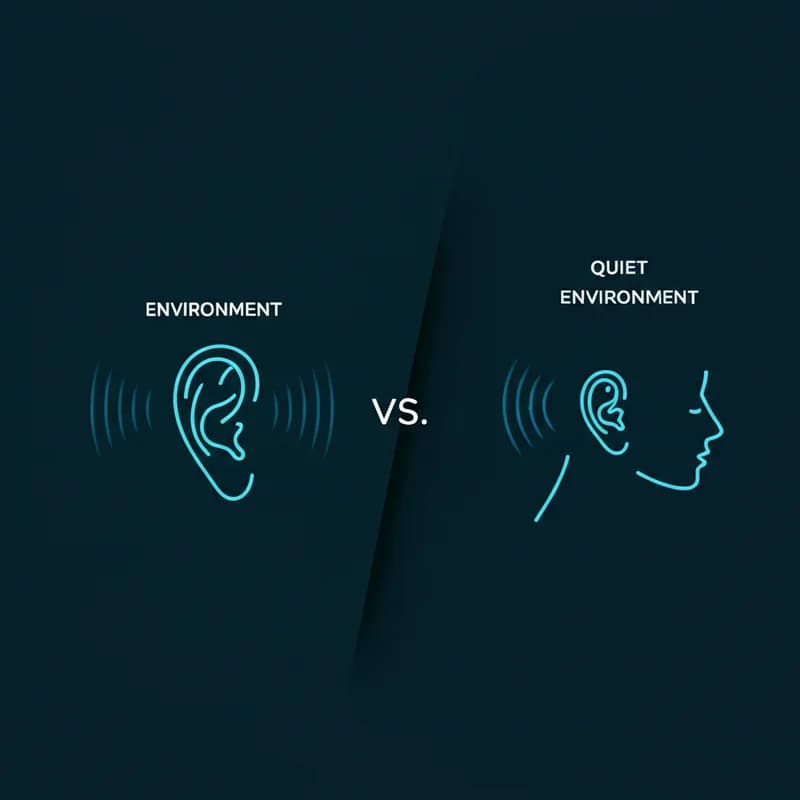
The contrast effect: Why tinnitus dominates in quiet nighttime environments
The Science Behind Nighttime Tinnitus
Understanding the neuroscience behind nighttime tinnitus can help you approach the problem more strategically. Research has identified several key factors that explain why tinnitus becomes more problematic when you're trying to sleep.
The Auditory Cortex and Neural Plasticity
Your auditory cortex—the part of your brain that processes sound—doesn't simply stop working when there's no external input. Instead, it becomes more sensitive, actively searching for sounds to process. This heightened sensitivity makes internal sounds like tinnitus much more noticeable.
According to research published in the Journal of Neuroscience, the brain's neural gain increases in quiet environments, amplifying all signals—including the abnormal neural activity that causes tinnitus perception.
The Stress-Anxiety-Tinnitus Cycle
When you can't sleep because of tinnitus, your body releases stress hormones like cortisol and adrenaline. These hormones increase your alertness and anxiety, which in turn makes you more aware of the tinnitus. This creates a vicious cycle:
- Tinnitus prevents sleep
- Anxiety about not sleeping increases
- Heightened anxiety makes tinnitus more noticeable
- Increased tinnitus awareness makes sleep even harder
- Cycle repeats and intensifies
Breaking this cycle requires addressing both the tinnitus itself and the anxiety surrounding it. This is why a comprehensive approach combining sound therapy with relaxation techniques is most effective.
The Role of Background Noise
Studies from the American Tinnitus Association have shown that adding background noise at the right volume can reduce tinnitus perception by 50% or more. The key is finding the "mixing point"—where the background sound is just loud enough to partially mask the tinnitus without being distracting.
This is different from completely covering the tinnitus. Research suggests that partial masking is actually more beneficial long-term because it allows your brain to gradually habituate to the tinnitus signal while still providing immediate relief.
The 7-Night Sleep Protocol
This structured 7-night protocol combines the most effective evidence-based strategies for sleeping with tinnitus. Each night builds on the previous one, creating sustainable habits that can dramatically improve your sleep quality.
Night 1: Establish Your Baseline
- ✓Go to bed at your usual time—don't try to force an earlier bedtime yet
- ✓Set up sound therapy at low volume (rain sounds or pink noise recommended)
- ✓Keep a simple sleep journal: time to bed, estimated time to sleep, awakenings
- ✓Don't stress about sleep—just observe and document
Night 2: Optimize Your Sound Environment
- ✓Experiment with different sounds: white noise, pink noise, brown noise, nature sounds
- ✓Find the "mixing point" volume where tinnitus is partially masked but sound isn't distracting
- ✓Set the sound to play continuously through the night (use background audio feature)
- ✓Position your phone or speaker at a comfortable distance from your bed
Night 3: Add Relaxation Techniques
- ✓Practice 5-10 minutes of guided breathing exercises before bed
- ✓Try the 4-7-8 breathing technique: inhale for 4 seconds, hold for 7, exhale for 8
- ✓Continue with your chosen sound therapy from Night 2
- ✓Avoid screens for 30 minutes before bed (or use blue light filters)
Night 4: Establish a Consistent Schedule
- ✓Set a fixed bedtime and wake time—even on weekends
- ✓Create a 30-60 minute wind-down routine: sound therapy + breathing + reading
- ✓Avoid caffeine after 2 PM and limit alcohol (both affect sleep quality)
- ✓Keep your bedroom cool (65-68°F / 18-20°C is optimal for sleep)
Night 5: Layer Your Sound Therapy
- ✓Combine multiple sound types for more effective masking (e.g., rain + pink noise)
- ✓If you know your tinnitus frequency, try frequency-matched sound therapy
- ✓Use an app like Earpeace to layer nature sounds with therapeutic noise colors
- ✓Continue relaxation routine from previous nights
Night 6: Address Nighttime Awakenings
- ✓Keep sound therapy playing all night to prevent tinnitus from becoming noticeable when you wake
- ✓If you wake up and notice tinnitus, don't fight it—use breathing exercises to relax
- ✓Avoid checking the clock (creates anxiety about lost sleep)
- ✓If you can't fall back asleep within 20 minutes, do a quiet activity with sound therapy until sleepy
Night 7: Evaluate and Adjust
- ✓Review your sleep journal from the past week
- ✓Identify which sounds and techniques worked best for you
- ✓Create your personalized sleep routine combining the most effective elements
- ✓Commit to continuing this routine for at least 30 days to build strong habits
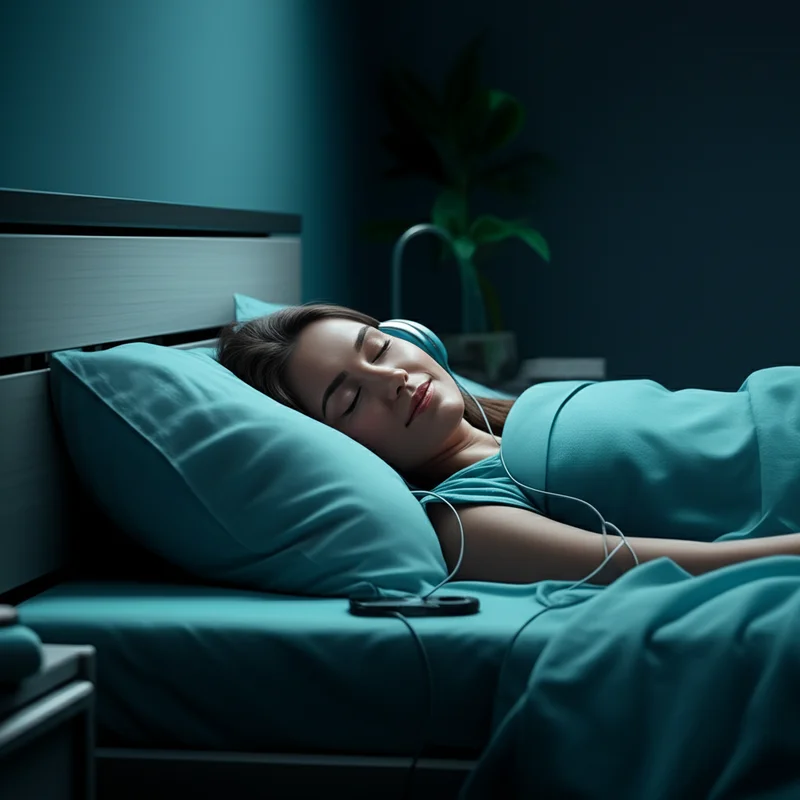
A calm bedroom environment with continuous sound therapy promotes better sleep with tinnitus
Sound Therapy Options for Sleep
Sound therapy is one of the most effective tools for managing nighttime tinnitus. The right sounds can provide immediate relief while also supporting long-term habituation. Here's a comparison of the most effective options:
| Sound Type | Best For | Pros | Cons |
|---|---|---|---|
| White Noise | Broad-spectrum masking | Effective at covering all frequencies | Can be harsh or hissing |
| Pink Noise | Deeper, gentler masking | More pleasant than white noise, better for sleep | May not mask high-frequency tinnitus as well |
| Brown Noise | Low-frequency tinnitus | Very deep and soothing | Limited masking for high-pitched tinnitus |
| Nature Sounds | Relaxation + masking | Psychologically soothing, natural feel | Variable effectiveness depending on type |
| Frequency-Matched | Targeted relief | Personalized to your tinnitus frequency | Requires frequency testing |
| Layered Sounds | Comprehensive masking | Can combine benefits of multiple types | May take time to find right combination |
Most people find that pink noise or layered nature sounds work best for sleep. Pink noise has a deeper, more pleasant quality than white noise, making it easier to listen to throughout the night. Nature sounds like rain, ocean waves, or forest ambience add a psychological component that promotes relaxation.
If you know your tinnitus frequency, frequency-matched sound therapy can provide more targeted relief. Apps like Earpeace include frequency matching tools that help you identify your tinnitus tone and generate personalized sounds for more effective masking.
Using Earpeace for Better Sleep
Earpeace offers several features specifically designed to help you sleep better with tinnitus. Here's how to make the most of the app for nighttime relief:
Background Audio for All-Night Relief
One of the most important features for sleep is Earpeace's background audio capability. Unlike some apps that stop when your phone screen turns off, Earpeace continues playing your chosen sounds throughout the night. This is crucial because:
- Brief awakenings won't be accompanied by sudden tinnitus awareness
- Your brain maintains the masking effect all night long
- You won't wake up in silence with ringing suddenly prominent
- The consistent sound environment supports deeper, more restful sleep
The Sanctuary: Layered Soundscapes
Earpeace's Sanctuary feature allows you to create personalized soundscapes by layering multiple sounds together. For sleep, try these combinations:
- Rain + Pink Noise: Creates a rich, full sound that masks effectively
- Ocean Waves + Brown Noise: Deep, soothing combination for low-frequency tinnitus
- Forest Ambience + White Noise: Natural feel with strong masking power
- Creek Sounds + Frequency-Matched Tone: Personalized relief with natural elements
Guided Breathing for Pre-Sleep Relaxation
Stress and anxiety about sleep can make tinnitus significantly worse. Earpeace includes guided breathing exercises designed to activate your parasympathetic nervous system, reducing stress hormones and promoting relaxation. Use these for 5-10 minutes before bed as part of your wind-down routine.
Dark Mode for Nighttime Comfort
Bright screens before bed can interfere with melatonin production and make it harder to fall asleep. Earpeace's dark mode interface is gentle on your eyes when you're using the app at night, preventing additional sleep disruption.
Ready to sleep better with tinnitus?
Download EarpeaceBedroom Environment Checklist
Your sleep environment plays a crucial role in how well you sleep with tinnitus. Use this checklist to optimize your bedroom:
Temperature & Air Quality
- ☐Keep room temperature between 65-68°F (18-20°C)
- ☐Use a fan or air purifier for gentle background noise and air circulation
- ☐Consider a humidifier if air is dry (can affect ear comfort)
Lighting
- ☐Install blackout curtains or use a sleep mask
- ☐Remove or cover any LED lights from electronics
- ☐Use dim red or amber nightlights if needed (doesn't disrupt melatonin)
Sound Environment
- ☐Set up sound therapy source (phone, speaker, white noise machine)
- ☐Position sound source at comfortable distance (not too close or far)
- ☐Test volume level during daytime to find optimal setting
- ☐Consider a second sound source if partner needs different environment
Comfort & Ergonomics
- ☐Invest in a comfortable mattress and pillows
- ☐Experiment with head elevation (some find it helps with tinnitus)
- ☐Use comfortable, breathable bedding
- ☐Keep bedroom clean and clutter-free (reduces anxiety)
Relaxation Techniques
Relaxation techniques address the anxiety-stress component of nighttime tinnitus. When you're relaxed, your brain is less likely to hyperfocus on the ringing. Here are the most effective techniques:
4-7-8 Breathing Technique
This simple breathing exercise activates your parasympathetic nervous system and promotes calm:
- Inhale through your nose for 4 seconds
- Hold your breath for 7 seconds
- Exhale slowly through your mouth for 8 seconds
- Repeat 4 times
Practice this technique during the day first, then use it as part of your bedtime routine. The extended exhale triggers your body's relaxation response.
Progressive Muscle Relaxation
This technique systematically relaxes your body from head to toe:
- Start with your face—tense the muscles for 5 seconds, then release
- Move to your neck and shoulders—tense, then release
- Continue with arms, chest, stomach, and legs
- Notice the contrast between tension and relaxation
- End with your whole body relaxed for 1-2 minutes
Guided Imagery
Guided imagery redirects your focus away from tinnitus and toward pleasant, relaxing scenes. Lie comfortably and visualize:
- A peaceful beach with gentle waves (complement your sound therapy)
- A quiet forest with rustling leaves
- A comfortable, safe place where you feel completely at ease
Apps like Earpeace often include guided breathing and relaxation exercises specifically designed for tinnitus sufferers. These can be more effective than generic relaxation apps because they acknowledge the unique challenges of tinnitus.
When to See a Doctor
While most tinnitus can be managed with self-care strategies like sound therapy and relaxation techniques, certain situations warrant medical attention. See a healthcare provider if:
- Your tinnitus is accompanied by hearing loss
- The ringing is only in one ear (unilateral tinnitus)
- You experience dizziness, vertigo, or balance problems
- Tinnitus is pulsatile (rhythmic, in time with your heartbeat)
- Symptoms appeared suddenly rather than gradually
- Tinnitus is significantly affecting your quality of life despite self-management
- You notice discharge or pain in your ears
A doctor can rule out underlying conditions, check for earwax blockage, assess your hearing, and discuss additional treatment options. They may refer you to an audiologist or ENT specialist for more specialized care.
Learn more about why tinnitus gets worse at night and what you can do about it.
Frequently Asked Questions
Why is my tinnitus louder at night?+
What is the best sound to mask tinnitus for sleep?+
How long does it take to habituate to tinnitus?+
Can tinnitus cause insomnia?+
Should I use sound therapy all night?+
Will I ever sleep normally with tinnitus?+
What sleeping position is best for tinnitus?+
Can melatonin help with tinnitus-related sleep problems?+
Start Sleeping Better Tonight
You don't have to struggle with sleepless nights forever. With the right combination of sound therapy, relaxation techniques, and consistent habits, you can get restful sleep despite tinnitus.
Download Now4.8★ rating on the App Store